
Jewish wedding invitation — layout, wording & etiquette
Your comprehensive guide to designing a meaningful Jewish or Hebrew wedding invitation.

✓ Certified Hebrew proofing included with every order
how to choose your key elements
As couples plan their Simcha, a Jewish wedding invitation is a special way to incorporate the values and symbols that matter most — the Chuppah, Tree of Life, Jerusalem, Star of David, Tallit, and more — conveying a meaningful message to every guest. This guide walks you through the four decisions that shape your invitation: format, verse, wording, and design.
1 · layout & format
First, decide whether you want your invitation in both Hebrew and English, and how the two languages share the page. The most popular choice is a one-side layout — both languages on a single side, arranged in any of these ways:

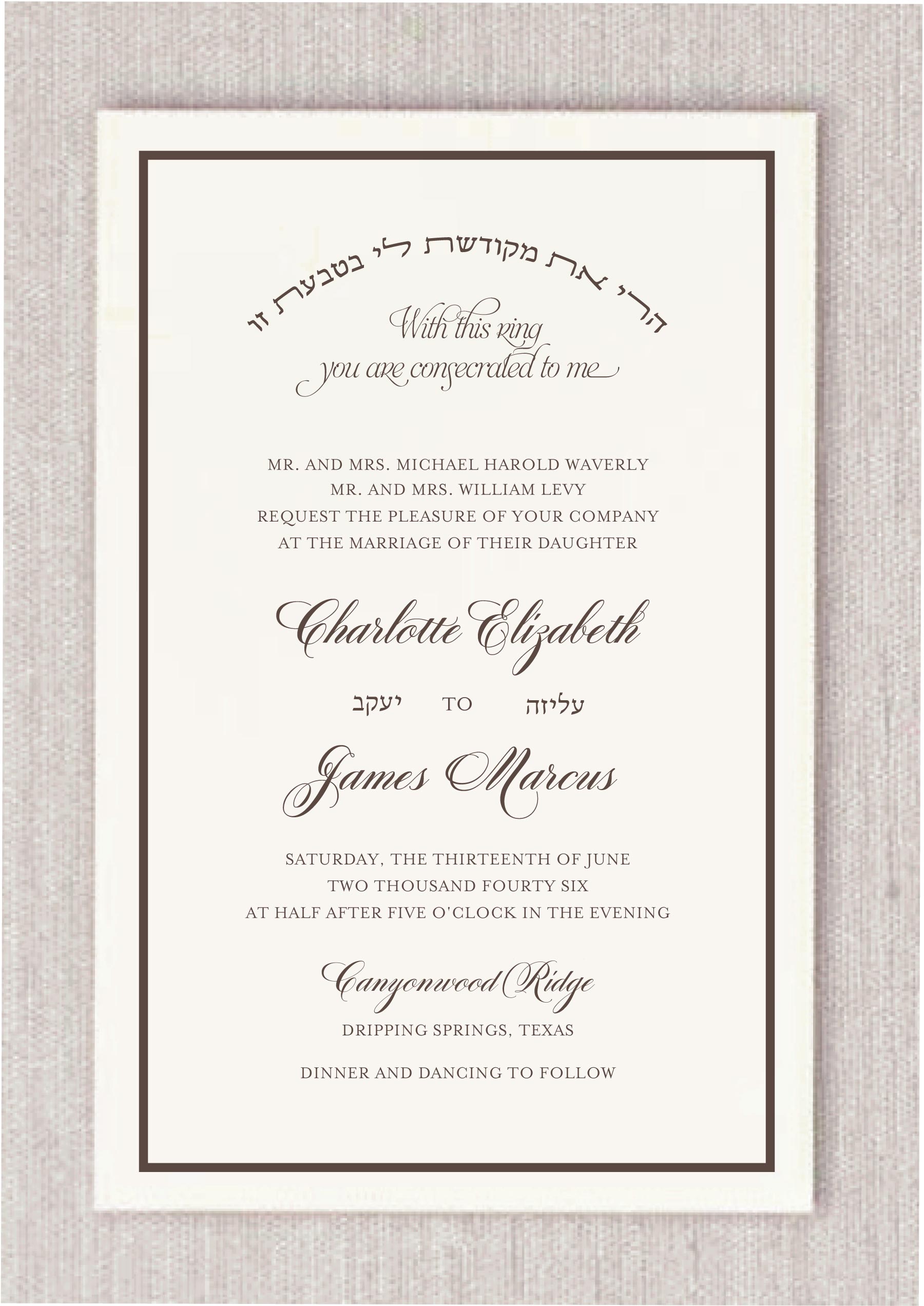


other formats


Two-sided
An identical Hebrew invitation on one side and the English wording on the other. A very popular choice — and more economical than the folder, which costs considerably more.


Folder
Your design on the front; open it to find English on the right and Hebrew on the left.

One-card
Names and date in both languages, with minimal Hebrew, all on one card.
2 · choose your verse (pasook)
It’s common to include a Pasook — a verse from the Torah — in your Jewish or Hebrew wedding invitation. A few of the most beloved:
אֲנִי לְדוֹדִי וְדוֹדִי לִי
I am my beloved’s, and my beloved is mine
Shir Hashirim 6:3
The mutual love and devotion between the couple — each partner belongs to the other.
מָצָאתִי אֵת שֶׁאָהֲבָה נַפְשִׁי
I have found the one whom my soul loves
Shir Hashirim 3:4
Finding one’s soulmate — a romantic, spiritual expression of deep love and commitment.
עוֹד יִשָּׁמַע בְּעָרֵי יְהוּדָה וּבְחֻצוֹת יְרוּשָׁלַיִם
Od yisama b’arei Yehuda u’bechutzot Yerushalayim
Yirmiyahu 33:10
“And it will be heard again in the cities of Judah and the streets of Jerusalem” — the joy that fills a wedding.
קוֹל שָׂשׂוֹן וְקוֹל שִׂמְחָה קוֹל חָתָן וְקוֹל כַּלָּה
Kol sasson v’kol simcha, kol chatan v’kol kallah
Yirmiyahu 33:11
“The voice of joy and gladness, the voice of the groom and the voice of the bride.”
הֲרֵי אַתְּ מְקֻדֶּשֶׁת לִי בְּטַבַּעַת זוֹ כְּדָת מֹשֶׁה וְיִשְׂרָאֵל
Harei at mekudeshet li betaba’at zo
The ring vow · under the chuppah
Recited as the groom places the ring on the bride’s finger: “By this ring you are consecrated to me, in accordance with the laws of Moses and Israel.”
3 · wording & etiquette
Your wording choices depend on whether you’re Reform, Orthodox, Ashkenazi, or Sephardic. Many couples open with a phrase invoking divine blessing:
B”H — ב”ה
For “Behezrat Hashem” or “baruch Hashem,” meaning “G-d willing.” Mainly used by Ashkenazi Jews.
BS”D — בס”ד
“Besiata d’shmaya,” an Aramaic phrase meaning “with the help of Hashem.” Primarily used by Sephardic Jews.
Be’Ezrat Hashem Yitbarach
“With the help of G-d.” Predominantly used by Orthodox Jews.
With gratitude to Hashem — בשבח והודאה לה׳ יתברך
Mostly used by Orthodox couples. These invitations radiate joy, beginning by praising and thanking Hashem rather than the traditional “request the honor of your presence.”
Hebrew date — תאריך עברי
Orthodox couples often add the Hebrew date, reflecting their commitment to preserving Jewish tradition.
Kabbalat Panim — קבלת פנים
Guests gather to greet and celebrate the bride and groom. Couples may list its timing so guests can join.
Bedeken
The pre-wedding ceremony where the groom veils the bride. Its timing is often included so no one misses this heartfelt moment.
Dress code
Modest dress at an Orthodox wedding is much like black tie at a formal event — covered shoulders, appropriate length, and no jeans or shorts.
4 · design symbols
Infuse your invitation with symbols that carry profound cultural and spiritual meaning — conveying your connection to Jewish heritage and tradition.
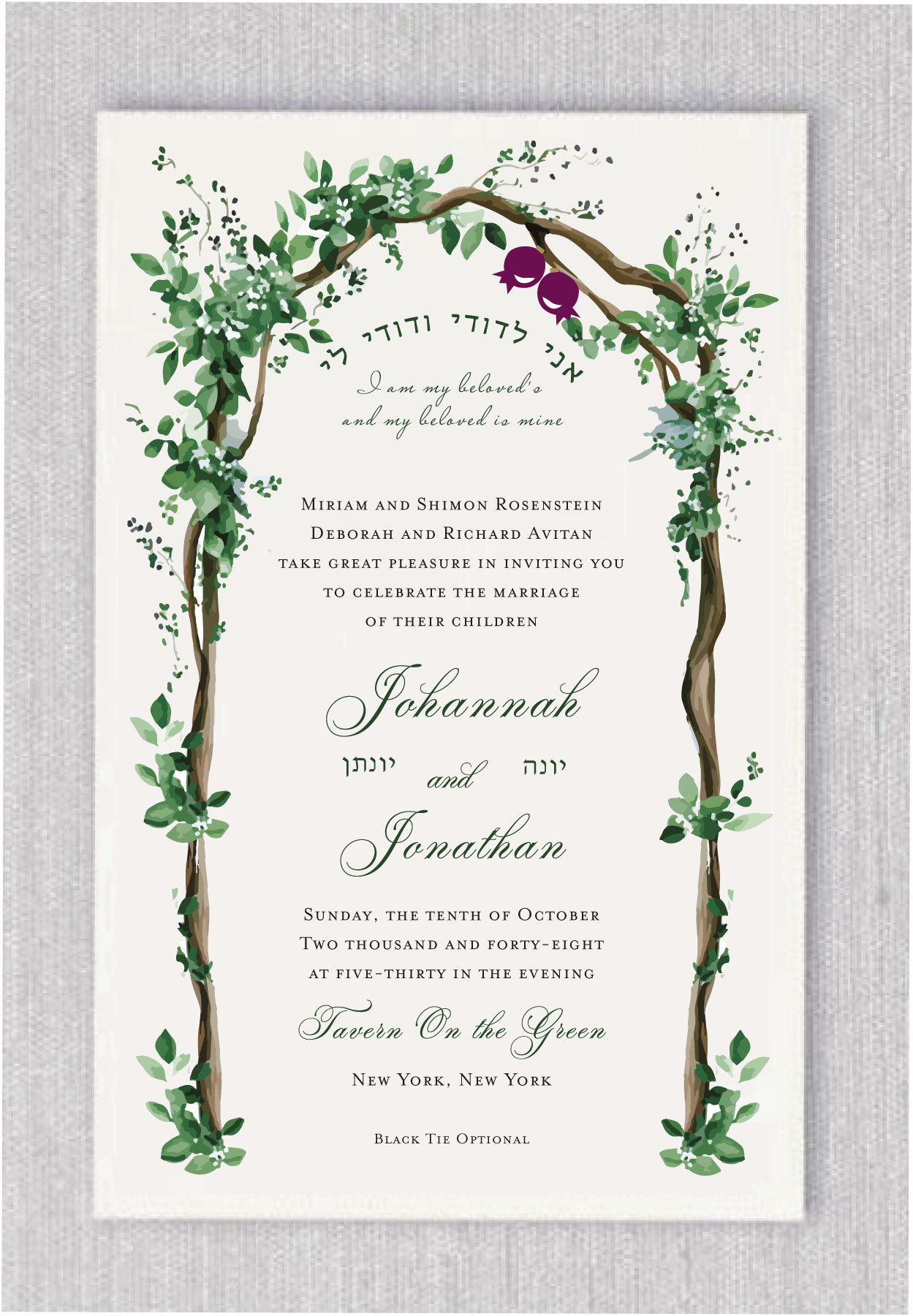
Chuppah
Symbolizes the chuppah ceremony — often adorned with flowers, roses, or leaves.

Tree of Life
Symbolizes prosperity and a strong foundation — featuring pomegranates, apples, or leaves.

Jerusalem
A profound connection to the holy land of Israel and the sacred city.
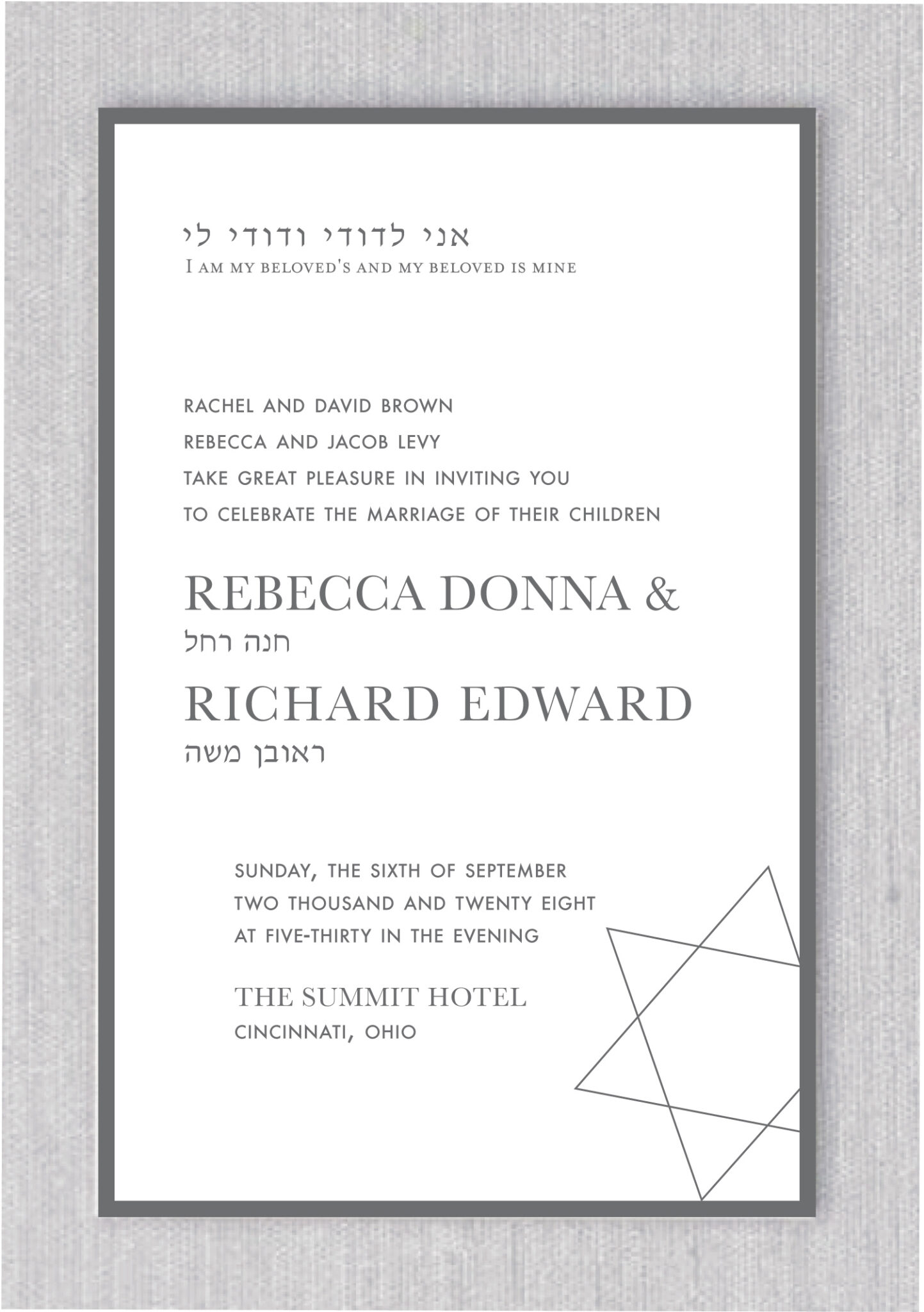
Star of David
An iconic symbol of deep connection to the Jewish faith and heritage.

Tallit
Represents the tallit worn under the Chuppah — signifying shelter and unity.

Pomegranate
A cherished symbol of fruitfulness and abundance — its many seeds are said to echo the 613 mitzvot.
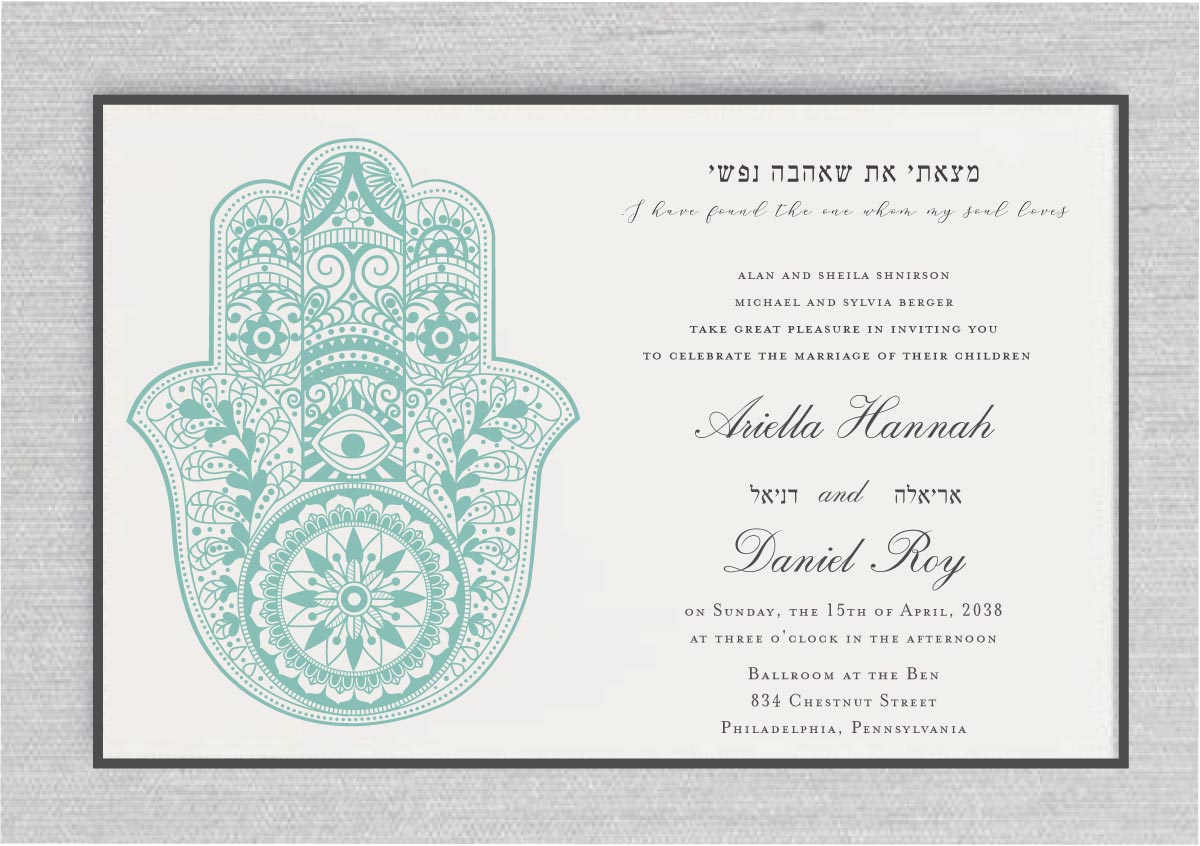
Hamsa
A protective hand-shaped symbol said to guard against the evil eye and invite blessing and good fortune.

Roses
Soft, romantic blooms framing your details — a contemporary, elegant take on the floral chuppah.

Garden of Eden
A flourishing chuppah canopy of blossoms beneath a tallit — evoking paradise, love, and new beginnings.
5 · chabad lubavitch invitations
Chabad Lubavitch wedding invitations follow their own cherished customs. They’re typically written entirely in Hebrew — with an optional English version on the reverse — and feature the verse נעלה את ירושלים על ראש שמחתינו, קול ששון וקול שמחה קול חתן וקול כלה, the song sung beneath the chuppah. Many also include a heartfelt reference to Moshiach, in keeping with the community’s values.

Black Tie Lubavitch

Pomegranate Lubavitch

L’Chaim Lubavitch
ready to start?
✓ Certified Hebrew proofing included with every order. We personally verify your Hebrew dates, Parsha, and parent lines against the Jewish calendar — so you never have to worry about a mistake on your special day.
printed invitations
digital paperless invitations
- Digital Paperless Invitation — Jewish Wedding
- Digital Paperless Invitation — Hebrew Wedding
- Digital Paperless Invitation — One Side Jewish WeddingPopular
- Digital Paperless Invitation — Double Sided Jewish WeddingPopular
- Digital Paperless Invitation — Jewish Wedding Save the Date
- Digital Paperless Invitation — Chabad Lubavitch WeddingNew